






Disclosure: This article contains affiliate links. If you buy through them, I may earn a commission at no extra cost to you.
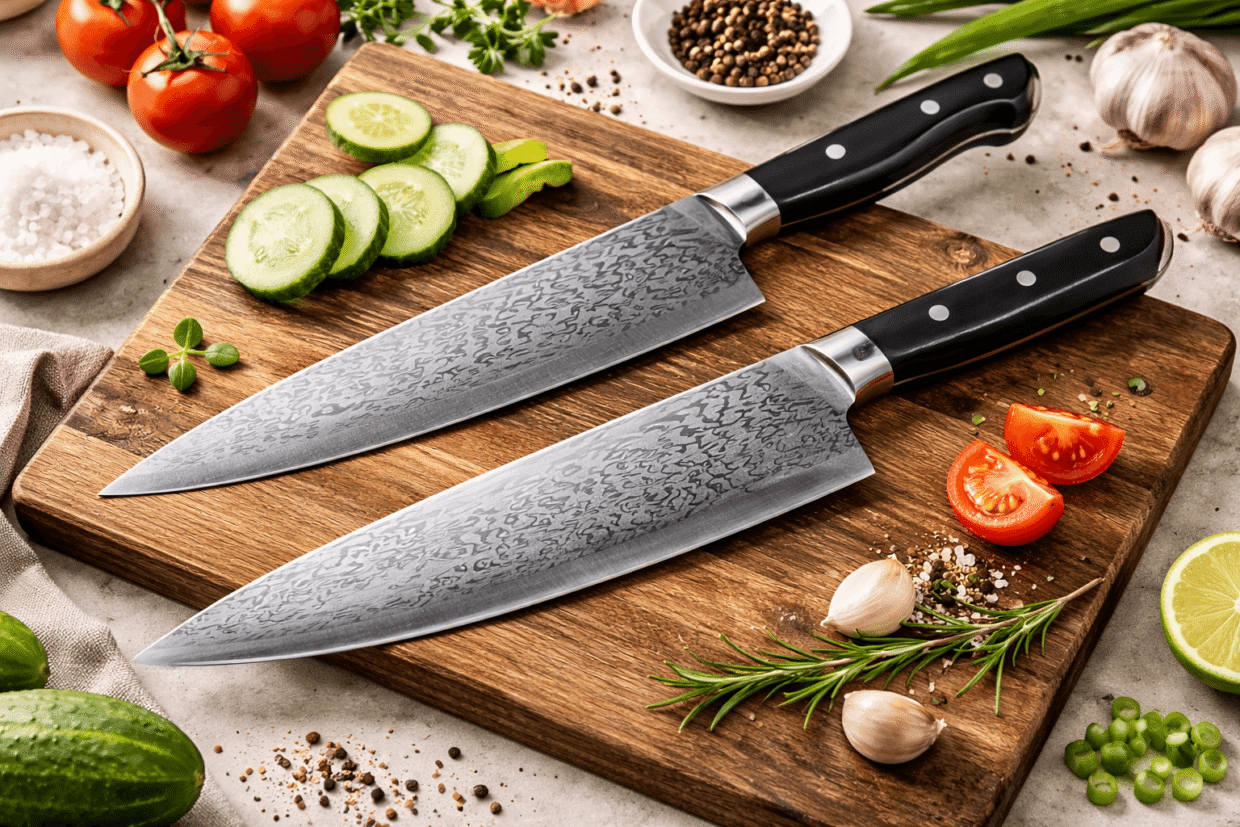
Choosing the best Japanese chef knife is not about buying the most expensive blade or the one with the most dramatic Damascus pattern. It is about choosing a knife that fits your cooking style, feels natural in your hand, stays sharp, and makes daily prep easier rather than harder.
That is why so many buyers get overwhelmed.
You will see terms like Gyuto, VG-10 core, AUS-10 steel, 67-layer Damascus, full tang, and G10 handle, but without context these features can sound more impressive than useful. The truth is that the best Japanese chef knife for one cook may be completely wrong for another.
In this guide, I will break down what really matters when choosing a Japanese chef knife and compare the featured options you want to promote:
- Chef Knife 8 Inch – Hand Forged Kitchen Knife with 67-Layer Japanese Damascus Steel, AUS-10 Core & G10 Handle
- Made In Cookware 8″ Japanese Damascus Steel Gyuto with VG-10 Core
- Made In Cookware 8″ Japanese Damascus Steel Gyuto with VG-10 Core
One important note: the last two links appear to be the same Made In 8-inch Damascus Gyuto product, based on the identical title and Amazon listing details.
Jump To Section
What Makes a Japanese Chef Knife Different?
A Japanese chef knife is usually designed for cleaner, more precise cutting, a thinner blade profile, and a sharper-feeling edge than many heavier Western chef knives. In practical terms, that often means smoother slicing of vegetables, proteins, herbs, and fruit with less crushing and less resistance through the cut.
The Japanese equivalent of an all-purpose chef knife is often the Gyuto. It is the most versatile style for most home cooks because it can handle a wide range of kitchen jobs, from slicing onions and herbs to portioning meat and prepping fish. Both of the knives you want to promote are positioned as 8-inch Gyuto-style chef knives, which makes them suitable as primary kitchen knives for general use.
If you only want one serious knife for everyday prep, an 8-inch Gyuto is a very sensible place to start.
The Most Important Things To Look For
Before looking at the featured products, here are the factors that matter most.
1. Blade steel
Steel affects sharpness, edge retention, toughness, stain resistance, and ease of maintenance.
The first knife is listed with an AUS-10 core wrapped in 67-layer Japanese Damascus steel. The Made In Gyuto is listed with a VG-10 core and 66 layers of Damascus steel. Both AUS-10 and VG-10 are popular premium Japanese stainless steels used in kitchen knives because they are known for combining sharpness, corrosion resistance, and respectable edge retention.
In plain English:
- AUS-10 is often appreciated for good toughness, strong sharpness, and a slightly forgiving feel in real kitchen use.
- VG-10 is a classic premium Japanese knife steel widely used in quality blades and often praised for holding an edge well while remaining stainless.
Neither automatically wins for every buyer. What matters more is how the knife feels, how you use it, and whether the blade geometry suits your prep style.
2. Blade shape
An 8-inch Gyuto is the most practical “do-everything” Japanese chef knife shape for most kitchens. It is long enough for slicing cabbage, melons, and proteins, but still manageable for everyday chopping and detail work.
Both the AUS-10 knife and the Made In knife are marketed as 8-inch Gyuto chef knives, which is exactly the style most readers should start with if they want one premium Japanese chef knife rather than a specialised collection.
3. Handle material and grip
A knife can have excellent steel and still feel wrong in use if the handle is slippery, too bulky, or badly balanced.
The first knife uses a G10 handle, while the Made In Gyuto uses a black POM handle and full tang construction. G10 is known for being durable, moisture-resistant, and stable. POM is also popular in kitchen knives because it is low-maintenance, durable, and gives a secure grip.
If you cook often, handle comfort matters more than many buyers expect. You feel the handle on every single cut.
4. Balance
A well-balanced knife reduces fatigue and improves control. The AUS-10 knife is explicitly marketed as perfectly balanced, while the Made In knife highlights full tang construction, which often contributes to a stable, controlled feel.
This matters for tasks like:
- Long prep sessions
- Fine slicing
- Repetitive vegetable chopping
- Portioning meat cleanly
A knife that feels too blade-heavy or handle-heavy can become tiring faster than expected.
5. Maintenance expectations
A Japanese chef knife should not be treated like a cheap beater knife. Even with stainless premium steels like AUS-10 and VG-10, proper care helps preserve the edge and appearance.
That means:
- Hand wash only
- Dry immediately
- Avoid twisting through hard materials
- Use a wood or quality plastic cutting board
- Store safely
- Hone or sharpen properly when needed
The better the knife, the more worth it this care becomes.
Product Comparison: Which Knife Is Right for You?
1) Chef Knife 8 Inch – 67-Layer Damascus Steel, AUS-10 Core, G10 Handle
Check the AUS-10 Damascus Chef Knife here
This knife is marketed as an 8-inch hand-forged kitchen knife with 67-layer Japanese Damascus steel, an AUS-10 core, and a G10 handle, positioned as an ultra-sharp, balanced Gyuto for both home cooks and professionals.
Why it stands out
This is the knife to promote if your angle is performance plus value-style appeal. The listing packs in many of the features buyers want when shopping for a Japanese chef knife:
- 8-inch versatile Gyuto profile
- AUS-10 premium stainless core
- 67-layer Damascus construction
- Durable G10 handle
- Sharpness-focused marketing
- Balanced everyday use
That combination makes it attractive for buyers who want the feel of a premium Japanese-style knife without necessarily shopping only prestige cookware brands.
Who it suits best
This knife is a strong fit for:
- Home cooks upgrading from a basic chef knife
- Buyers who want a modern Japanese-style knife
- Shoppers drawn to AUS-10 steel
- People who want a durable, low-maintenance handle material
Main selling angle
The best promotional angle here is: premium Japanese-style performance with practical everyday usability. The AUS-10 core and G10 handle help position it as a serious working knife, not just a decorative Damascus piece.
2) Made In Cookware 8″ Japanese Damascus Steel Gyuto – VG-10 Core
Check the Made In 8-inch Damascus Gyuto here
The Made In knife is listed as an 8-inch Japanese Damascus Steel Gyuto with 66 layers of Damascus steel, a VG-10 core, crafted in Japan, and a full tang black POM handle.
Why it stands out
Made In has stronger brand recognition than many Amazon marketplace knife brands, and that matters to buyers who want a more established cookware and knife brand.
Its strongest talking points are:
- Crafted in Japan
- VG-10 core steel
- 66-layer Damascus blade
- Full tang construction
- POM handle with low-maintenance grip
The listing also points to the VG-10 core as having higher carbon content than other knives in Made In’s collection, helping it stay sharper longer, while the Damascus layering is positioned as both functional and visually distinctive.
Who it suits best
This knife is especially well suited to:
- Buyers who trust established cookware brands
- Cooks who want a refined, premium-presenting Gyuto
- Home chefs who want a knife that feels more professional
- People specifically looking for VG-10 steel
Main selling angle
The best way to market this one is: brand-backed Japanese craftsmanship with premium VG-10 performance. That is a very appealing message for buyers who want a knife that feels like a real long-term kitchen upgrade rather than an impulse purchase.
3) The Third Link: Same Made In Gyuto, Alternate Affiliate Link
Check the same Made In Gyuto here
Because the third product appears to be the same Made In 8-inch Damascus Gyuto as the second one, it should be treated as an additional affiliate link to the same knife, not as a separate product with different features. The identical product title supports that conclusion.
That means your article should really frame this guide as a comparison between:
- the AUS-10 Damascus Gyuto
- the Made In VG-10 Damascus Gyuto
rather than pretending there are three different knives.
AUS-10 vs VG-10: Which Steel Should You Choose?
This is often the part buyers focus on most, and for good reason.
Choose AUS-10 if you want:
- A premium Japanese stainless steel
- Strong sharpness with good durability
- A knife marketed as highly balanced and practical
- A value-conscious premium option
That description fits the first 67-layer AUS-10 Damascus chef knife.
Choose VG-10 if you want:
- A very established premium Japanese knife steel
- A knife from a more recognised cookware brand
- Crafted-in-Japan positioning
- Full tang construction and brand-backed refinement
That description fits the Made In 8-inch Damascus Gyuto.
For most home cooks, both steels are strong choices. The decision often comes down less to abstract metallurgy and more to trust in the brand, handle preference, pricing, and overall feel.
How To Pick the Right Knife for Your Cooking Style
For everyday family cooking
Choose an 8-inch Gyuto that feels balanced and comfortable. Both featured knives fit that brief, but the AUS-10 option may appeal more to buyers focused on practical performance, while Made In may appeal more to those wanting a premium branded kitchen upgrade.
For aspiring home chefs
The Made In Gyuto has a particularly strong premium image because it is marketed as crafted in Japan, uses a VG-10 core, and comes from a cookware brand that many buyers already know.
For gift buyers
Damascus knives sell extremely well as gifts because of the wave pattern and premium feel. Both knives are visually attractive on paper, but the Made In branding may feel more giftable to some buyers, while the AUS-10 knife may appeal to shoppers looking for feature-driven value.
For buyers upgrading from cheap knives
Either option will feel like a major step up from an entry-level stainless steel chef knife. The biggest improvements most users will notice are cleaner slicing, better balance, less drag through food, and a more satisfying overall cutting experience.
Common Mistakes To Avoid
Buying for the pattern only
Damascus looks beautiful, but do not choose a knife just because the blade looks dramatic. The core steel, balance, handle, and geometry matter more than appearance.
Ignoring handle comfort
A beautiful blade with an awkward handle becomes irritating fast. G10 and POM are both practical, durable handle materials, but hand feel still matters.
Choosing a specialist knife instead of a Gyuto
If this is your main kitchen knife, an 8-inch Gyuto is usually a safer buy than something more specialised.
Expecting zero maintenance
Even stainless Japanese chef knives need proper care. Hand wash them, dry them immediately, and avoid abuse.
My Recommendation
If you want the simplest buying advice, here it is.
Buy the AUS-10 67-layer Damascus Gyuto if:
- You want a premium-looking Japanese-style knife
- You like the sound of AUS-10 steel
- You want a G10 handle
- You are looking for a strong feature-to-value proposition
Recommended: Chef Knife 8 Inch – AUS-10 Damascus Gyuto
Buy the Made In 8-inch Damascus Gyuto if:
- You want a more established cookware brand
- You prefer VG-10 steel
- You want a knife explicitly marketed as crafted in Japan
- You want a full tang knife with a POM handle
Recommended: Made In 8-inch Japanese Damascus Steel Gyuto or alternate link here
Final Verdict
The best Japanese chef knife is the one that makes your prep work more precise, more enjoyable, and less tiring.
For most readers, an 8-inch Gyuto is the right format. It is versatile, practical, and capable of handling nearly everything in a home kitchen. Both featured knives fit that role well. The first knife leans into AUS-10, G10 durability, and balanced performance, while the Made In option leans into VG-10, Japanese craftsmanship, and stronger premium brand positioning.
So the choice is not really about which knife sounds more impressive on paper. It is about which one best matches how you cook, what kind of brand confidence you want, and which materials appeal to you most.
If you want a practical premium upgrade, go with the AUS-10 Damascus Gyuto.
If you want the more polished brand-led option, go with the Made In Japanese Damascus Gyuto.
And if your goal is simply to buy one excellent Japanese chef knife that can serve as your everyday kitchen workhorse, either of these is a smart place to start based on the listing details available.
Your post is a true masterpiece. I\’ll be referencing it in my own work.
Thank you so much! I’m honored that you found my post valuable enough to reference. If you have any questions or need more details for your work, feel free to reach out!
I’m so glad I found your site. Your posts are consistently excellent.
That means a lot—thank you! I’m really glad you’re enjoying the content. If there’s ever a topic you’d like to see covered, just let me know!