




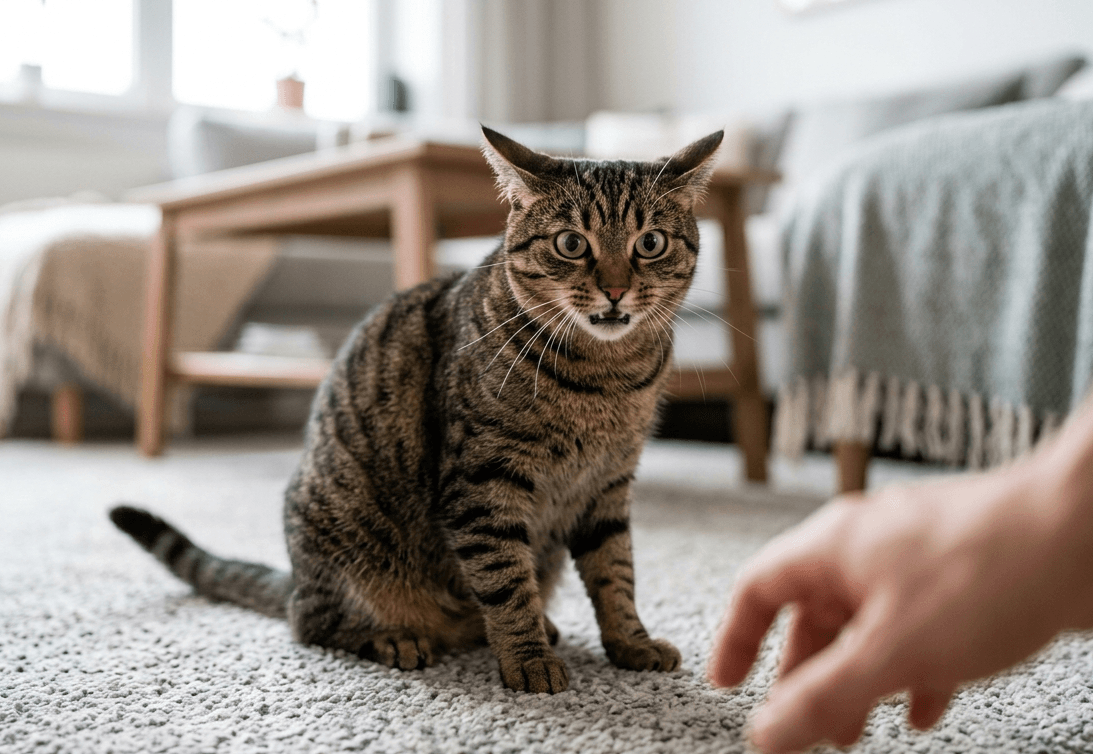
“Unprovoked” biting is one of the most frustrating behaviors for cat owners. However, in the world of feline ethology, a bite is rarely random. Cats communicate through subtle body language, and when those signals are ignored, they resort to physical correction.
To stop the biting, you must first identify the “why” behind the behavior. Here are the 5 most common reasons for cat aggression and the tools to fix them.
1. Overstimulation (Petting Aggression)
Many cats have a “threshold” for physical touch. After a few minutes of petting, the sensation can become overwhelming or even painful (hyperesthesia). If you miss the tail twitching or skin rippling, the cat will bite to tell you “stop.”
- How to Stop It: Learn to read the “low-battery” signs (dilated pupils, flattened ears). Stop petting before they reach their limit.
2. Play Aggression
If your cat lunges at your ankles or bites your hands during play, they are treating you like prey. This usually happens when owners use their hands as toys during kittenhood.
- Recommended Tool: Never use your hands to play. Use a long wand toy to keep distance between your skin and their claws.
- Top Pick: PetSafe FrolicCat Bolt Interactive Laser Toy or the Jackson Galaxy Ground Catcher Wand. These toys satisfy the hunting instinct safely.
3. Redirected Aggression
This happens when a cat sees something outside (like another cat or a squirrel) that they cannot reach. Their frustration builds up, and they “redirect” that energy onto the nearest person or pet.
- How to Stop It: Block their view of the trigger or use a calming aid to lower their overall stress levels.
- Top Pick: FELIWAY Optimum Cat Calming Diffuser. This is a top-rated USA product that uses pheromones to reduce stress-related aggression.
4. Boredom and Lack of Vertical Space
Cats are territorial predators. If they feel bored or “trapped” on the ground, they may lash out to assert dominance or seek attention.
- Recommended Gear: Provide vertical “escape routes.” A sturdy cat tree allows them to observe their environment from a position of safety.
- Top Pick: FEANDREA Cat Tree with Scratching Posts. Adding a tree provides a designated “safe zone” for the cat.
5. Pain or Medical Issues
If a normally docile cat suddenly starts biting when touched in a specific area, it is likely a medical issue like arthritis or dental pain.
- Action Plan: If the biting is sudden and localized, schedule a vet visit immediately. No amount of training will fix a bite caused by physical pain.
FAQs
1. Why does my cat bite me gently and then lick me?
These are often called “love bites.” While they aren’t aggressive, they are still a sign of overstimulation. It’s the cat’s way of saying, “I like you, but I’ve had enough petting for now.”
2. Should I hiss at my cat when they bite?
Hissing can sometimes work, but it can also escalate the situation by making the cat more fearful or aggressive. A better approach is to immediately withdraw all attention and walk away.
3. Can I use a spray bottle to stop the biting?
Most behaviorists advise against spray bottles. It damages the bond between you and the cat and usually leads to the cat becoming more “sneaky” with their aggression.
Conclusion
Stopping “unprovoked” biting requires a shift from punishment to communication. By providing appropriate hunting outlets like Kong Kickeroo Toys and using Feliway Diffusers to manage stress, you can create a peaceful home. Remember: a tired cat is a well-behaved cat.