


Bringing a new puppy home is an incredibly exciting time, but it usually comes with a healthy dose of chaos. Between the needle-sharp teeth, the zoomies, and the unpredictable potty habits, you might find yourself wondering how to bring a little order to your household.
Enter crate training
While it can seem intimidating—and listening to those initial puppy whines tugs at the heartstrings—crate training is one of the most loving and practical things you can do for your dog. When done correctly, a crate doesn’t feel like a cage; it becomes your dog’s personal den, a safe haven where they can relax, sleep, and feel secure. Plus, it is an absolute game-changer for potty training and keeping them safe from chewing dangerous household items when you can’t supervise them.
It takes patience, consistency, and plenty of treats, but you and your pup can absolutely master this. Here is your step-by-step guide to crate training your new best friend.
Step 1: Choose the Right Crate
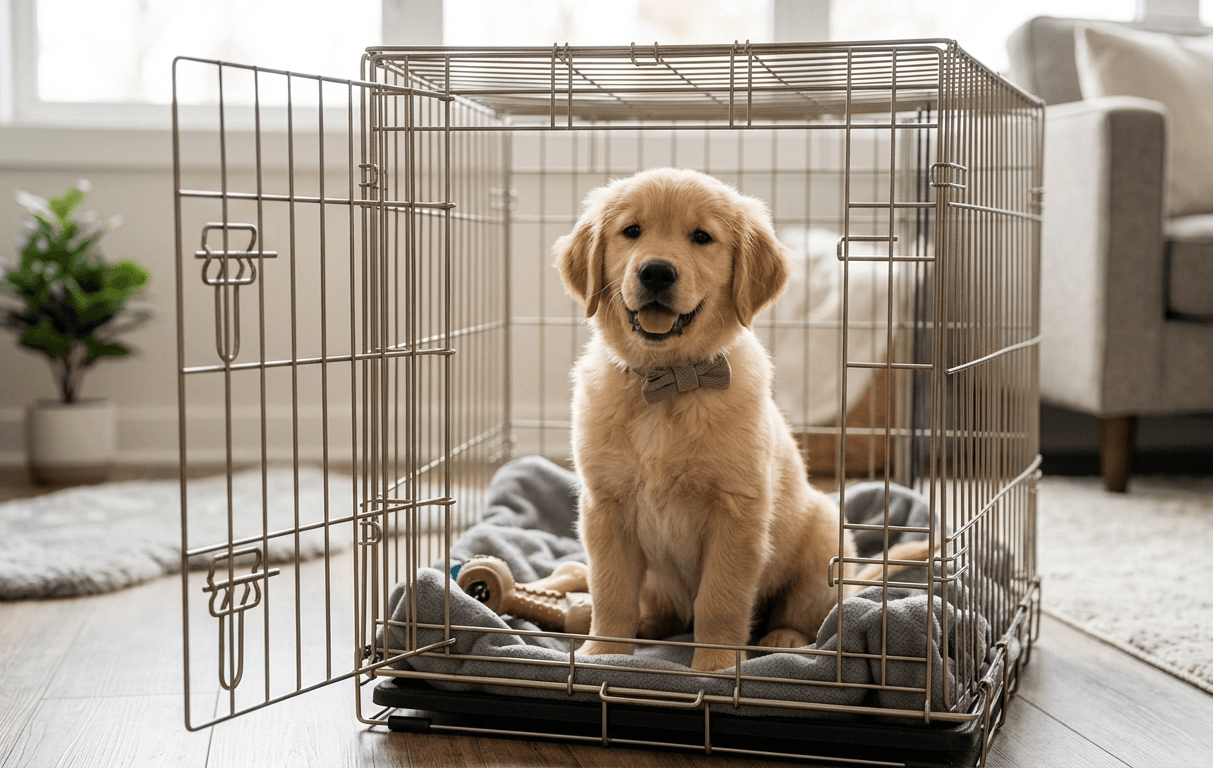
Size is everything. If the dog crate is too small, your puppy will be uncomfortable. If it’s too large, they might use one corner as a bedroom and the other as a bathroom—defeating the purpose of using the crate for potty training.
The Golden Rule: The crate should be just large enough for your puppy to stand up, turn around, and lie down comfortably.
- Pro Tip: If you have a large breed puppy, buy a crate that will fit their adult size, but make sure it comes with a divider. You can adjust the divider to give them just enough space as they grow.
Step 2: Make the Introduction (Slowly!)
Do not simply put your puppy in the crate, shut the door, and walk away. This is the fastest way to create crate anxiety. The goal is to build a positive association from day one.
- Set the scene: Place the crate in a high-traffic area, like the living room, so your puppy doesn’t feel isolated. Prop the door open securely so it won’t swing shut and spook them.
- Add comfort: Put a soft blanket or a towel inside.
- Lure, don’t force: Sit near the crate and toss a few high-value treats (like tiny pieces of plain, cooked chicken or dog-safe peanut butter) near the door, then just inside, and eventually all the way at the back.
- Praise generously: Whenever your puppy steps inside, use a happy, calm voice to praise them. Let them leave whenever they want.
Step 3: Serve Meals in the “Den”
Once your puppy is comfortably going into the crate for treats, start feeding them their regular meals there. This solidifies the crate as a place where great things happen.
- If your puppy is still a bit hesitant, put the bowl just inside the door.
- As they get more comfortable over a few days, push the bowl further to the back.
- Once they are eating comfortably entirely inside the crate, gently close the door while they eat. Open it immediately when they finish.
Step 4: Practice Short Stays
Now it’s time to start getting them used to the door being closed when food isn’t involved.
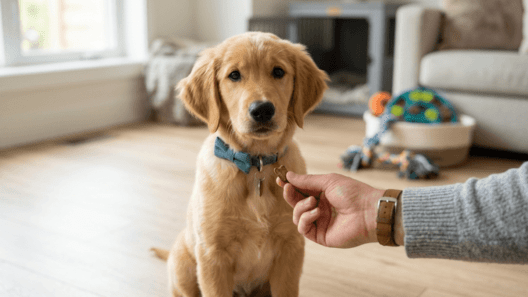
Call your puppy over to the crate and give a cue, like “kennel” or “crate,” pointing inside. When they go in, give them a treat and close the door. Sit quietly next to the crate for a few minutes, then open the door and let them out.
Gradually increase the time you leave the door closed. Once they can sit quietly for about 10 minutes with you in the room, try stepping out of the room for a minute or two.
Step 5: Increase the Distance and Time
As your puppy gets comfortable with you leaving the room, start leaving them in the crate for longer periods while you are home. You can give them a safe chew toy or a Kong stuffed with frozen puppy food to keep them occupied.
Eventually, you will be able to leave the house to run errands. When you leave and when you return, keep it low-key. If you make a massive, emotional deal out of leaving or coming back, it can trigger separation anxiety. Just calmly let them out and take them straight outside for a potty break.
Step 6: Conquering the Nighttime Routine
Nighttime crate training is often the hardest part because your puppy will naturally miss their littermates.
- Location: For the first few weeks, it is highly recommended to put the crate in your bedroom. Hearing your breathing and knowing you are nearby provides massive comfort.
- Whining: They will whine. It is crucial to learn the difference between a “I’m lonely and adjusting” whine and an “I desperately need to go potty” whine. If they’ve been asleep for a few hours and start crying, they likely need a bathroom break. Take them out, keep the interaction boring and quiet, and put them straight back in.
- Hold strong: If you know they don’t need to go potty, you have to ignore the crying. If you let them out when they throw a fit, you teach them that crying equals freedom.
🛑 Crucial Crate Training Rules
- NEVER use the crate for punishment. It must remain a sanctuary. If you banish them to the crate when you are angry, they will learn to fear it.
- Remove collars and harnesses. To prevent choking hazards, your dog should be “naked” when inside the crate.
- Respect their limits. Puppies physically cannot hold their bladders for very long. A good rule of thumb is that a puppy can hold it for one hour per month of age (e.g., a 3-month-old puppy maxes out at about 3 hours).
- Don’t over-crate. A crate is a management tool and a bed, not a storage box. Puppies need plenty of playtime, training, and socialization outside of the crate to grow into well-adjusted dogs.
Crate training takes time, and progress isn’t always linear. There will be days when your puppy protests, but by remaining calm, consistent, and positive, you are giving your dog a lifelong gift of security—and saving your favorite shoes from becoming chew toys in the process.