




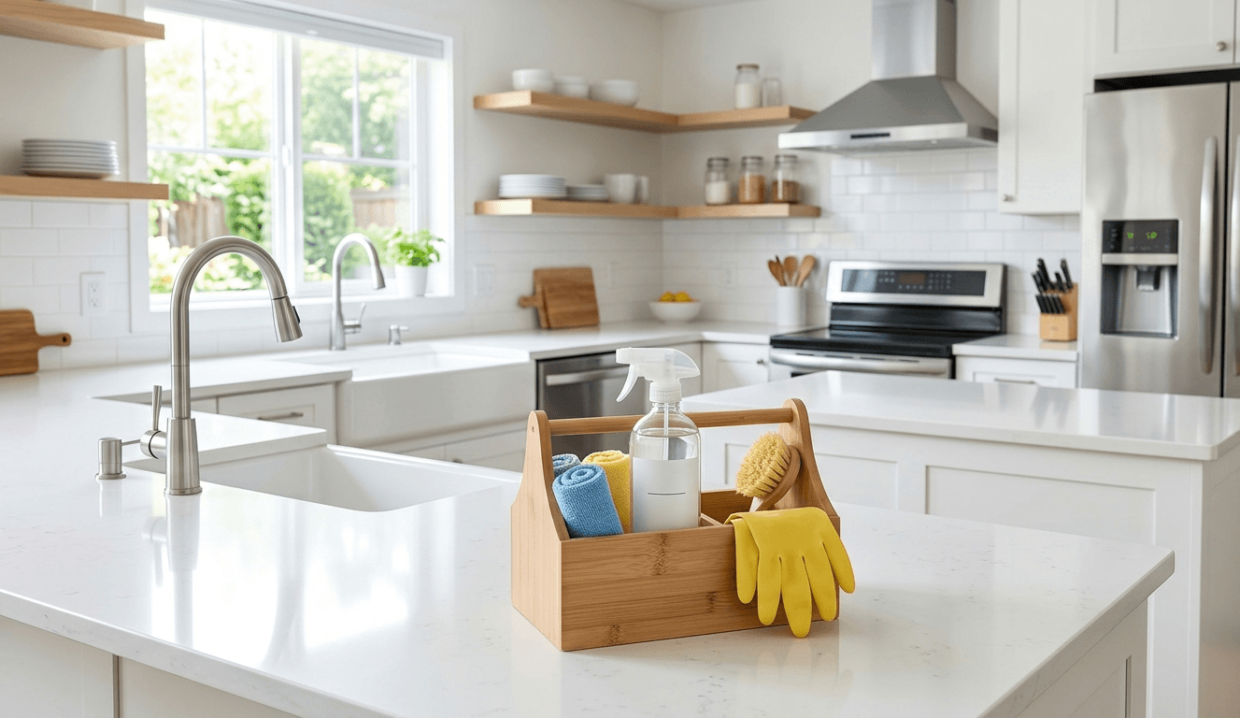
Let’s be honest: the kitchen is the heart of the home, but it’s also the headquarters for crumbs, grease, and mystery smells. While daily wipedowns keep the chaos at bay, a weekend deep clean is what actually restores that “new home” sparkle and ensures your cooking environment is hygienic.
In this guide, you will learn a systematic, step-by-step approach to stripping away grime from every corner of your kitchen. From degreasing cabinets to reviving stainless steel, we are turning a daunting task into a manageable weekend project.
Phase 1: The Declutter and Prep
Before you scrub, you must clear. You cannot deep clean surfaces you can’t see.
- Clear the Counters: Move everything—toasters, blenders, and spice racks—to the dining table.
- Check Expiry Dates: Empty the fridge and pantry. Toss anything past its prime.
- The Soak Technique: Fill your sink with hot, soapy water and soak burner grates, microwave turntables, and drain filters while you work on other areas.
Pro Tip: Use a Heavy-Duty Degreaser for the stovetop and range hood filters to save yourself hours of scrubbing.
Phase 2: High-Level Cleaning (Top to Bottom)
Always start from the ceiling and work your way down. This ensures that any falling dust or debris doesn’t ruin a surface you’ve already cleaned.
1. Dusting the “Invisible” Spots
Dust the tops of your kitchen cabinets, the refrigerator, and light fixtures. Use a long-handled duster or a damp microfiber cloth to trap allergens.
2. Degreasing Cabinets
Kitchen grease is a magnet for dust. Mix a solution of warm water and dish soap, or use a dedicated wood cleaner.
- Focus on handles: These are high-touch areas prone to bacteria.
- Inside Shelves: Wipe down the interior of cabinets before replacing your organized items.
Phase 3: The Appliance Deep Dive
This is where the real “deep” cleaning happens. Focus on the big three: the oven, the fridge, and the dishwasher.
| Appliance | Key Focus Area | Recommended Product/Method |
| Oven | Interior Glass & Racks | Baking soda paste or Oven Cleaner |
| Refrigerator | Door Seals & Coils | Vacuum coils; wipe seals with warm soapy water |
| Dishwasher | Filter & Spray Arms | Dishwasher Cleaning Tablets |
| Microwave | Dried Food Splatters | Steam with lemon water for 5 minutes |
Reviving Stainless Steel
To get that streak-free shine on your fridge and dishwasher, always wipe with the grain of the metal. A Stainless Steel Cleaner and Polish works wonders to prevent future fingerprints.
Phase 4: Scouring the Sink and Counters
By now, your counters should be empty and your sink soaking.
- Sanitize Countertops: Use a cleaner appropriate for your material (Quartz, Granite, or Laminate).
- The Sink Basin: Scrub the sink with a non-abrasive cleanser. Don’t forget the faucet aerator—soak it in vinegar to remove calcium buildup.
- Garbage Disposal: Drop in a few lemon slices or Disposal Care Lemme Fresh to kill odors instantly.
Phase 5: The Grand Finale – Floors
The very last step is the floor.
- Sweep/Vacuum: Get into the crevices under the baseboards.
- Mop: Use a Microfiber Spin Mop with a pH-neutral cleaner to ensure you aren’t leaving a sticky residue that attracts more dirt.
Conclusion
A deep-cleaned kitchen doesn’t just look better; it functions better. By breaking the process down into decluttering, top-down cleaning, and appliance detailing, you can transform your kitchen in a single weekend. Now, put on your favorite playlist, grab your supplies, and let’s get to work!
FAQs: Frequently Asked Questions
1. How often should I deep clean my kitchen?
For most households, a thorough deep clean every 3 to 4 months is ideal. However, high-traffic kitchens or those used for heavy frying may benefit from a bi-monthly schedule.
2. What is the fastest way to clean a greasy range hood?
The most effective method is soaking the metal filters in a mixture of boiling water and baking soda or a concentrated degreasing soap for 15 minutes before rinsing.
3. Can I use vinegar on all my kitchen surfaces?
No. While vinegar is a great natural cleaner, the acid can damage natural stone like granite or marble. Stick to specialized stone cleaners for those surfaces.
4. How do I get rid of a lingering smell in my refrigerator?
After wiping down all surfaces, place an open box of baking soda on a back shelf. It acts as a natural odor absorber for up to three months.
5. What is the best way to clean a glass stovetop without scratching it?
Apply a specialized Glass Cooktop Cleaner and use a non-scratch scrubbing pad. For burnt-on food, use a razor scraper at a 45-degree angle while the surface is wet.