


If you’ve ever finished a drum sanding pass only to realize your edges look like a completely different floor, you know the importance of a high-performance edge sander. It is arguably the most physically demanding part of floor restoration, and the tool you choose dictates whether you’ll be done in an hour or fighting “pig tails” and dust clouds all day.
In this guide, we are ranking the top edge sanders based on two critical metrics: RPM (Revolutions Per Minute) and Dust Extraction Efficiency. You will learn how to balance speed with control and which machines keep your lungs (and your client’s house) the cleanest.
Why RPM Matters: Speed vs. Burn Marks
The RPM of an edge sander determines how quickly it removes material. However, more speed isn’t always better. High RPMs can lead to friction heat, which causes glazing on the sandpaper or unsightly burn marks on delicate hardwoods like Cherry or Maple.
- High Speed (3,000+ RPM): Best for aggressive stock removal, leveling uneven boards, and stripping old, thick finishes.
- Low Speed (1,500 – 2,500 RPM): Ideal for fine-grit finishing passes and working on softwoods where heat buildup is a major concern.
Pro Tip: Look for a sander with a variable speed trigger. This allows you to “feather” the edges into the main body of the floor for a seamless transition.
The Battle Against Dust: Extraction Efficiency
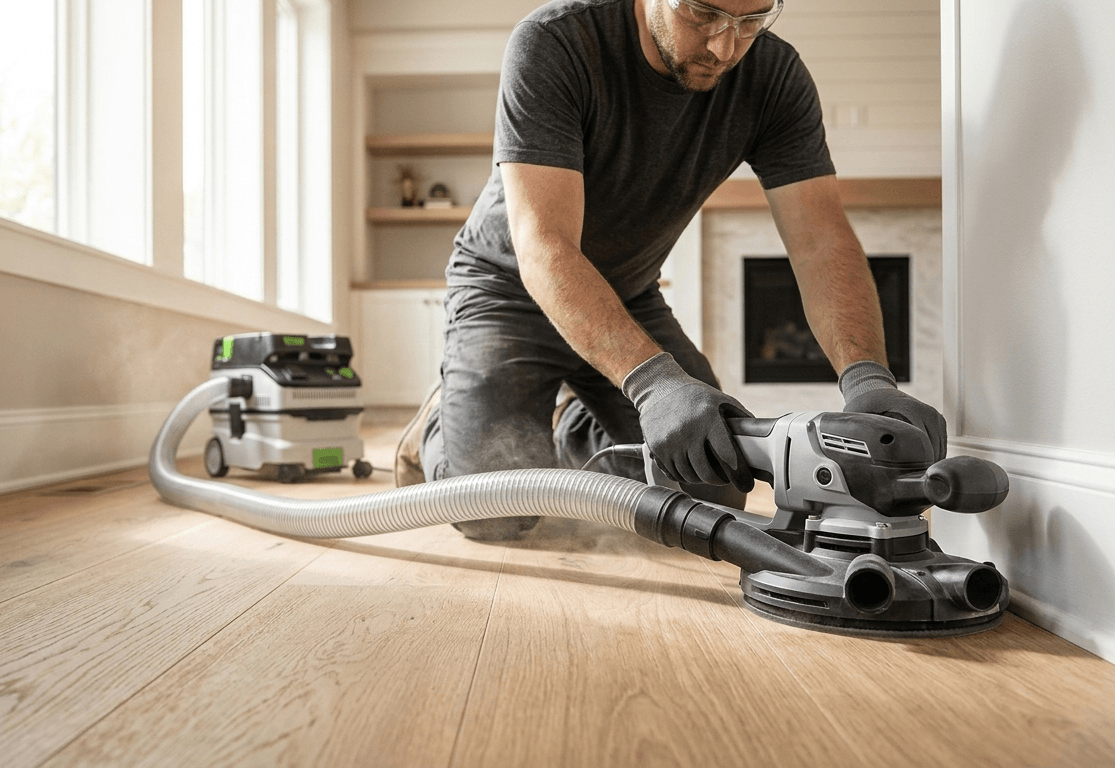
Edge sanders are notorious for being the messiest tools in a floor sander’s arsenal. Because they operate at high speeds close to the floor, they tend to “fling” dust before the vacuum can grab it.
A high-efficiency dust extraction system doesn’t just keep the room clean; it extends the life of your sandpaper by preventing clogging (loading). For the best results, you should always pair your sander with a high-quality Professional HEPA Dust Extractor rather than relying on the cloth bag provided with the machine.
Edge Sander Rankings: Top Models Compared
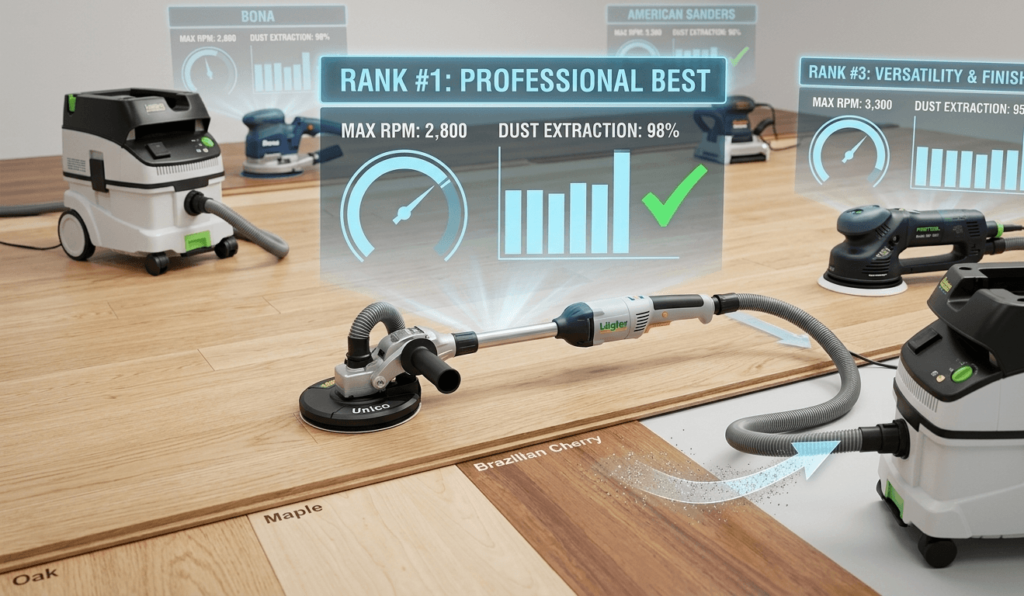
| Model Name | Max RPM | Dust Efficiency | Best For |
| Lägler Unico | 2,800 RPM | 98% (Industry Best) | Professional Restoration |
| Bona Edge XL | 3,000 RPM | 92% | Speed & High-Production |
| Festool RO 150 (Rotex) | 3,300 – 6,800 | 95% | Versatility & Fine Finishing |
| American Sanders B2+ | 3,200 RPM | 88% | Heavy Duty Leveling |
1. The Professional Choice: Lägler Unico
The Unico is the gold standard for a reason. Its long neck allows you to reach deep under radiators, and its dust extraction is unparalleled. If you are serious about E-E-A-T (Expertise and Authoritativeness) in your flooring business, this is the tool found in your kit.
2. The Versatile Hybrid: Festool Rotex RO 150
While not a traditional “long-neck” edge sander, the Festool Rotex RO 150 is a favorite for edging because of its aggressive “Rotex” mode. When paired with a Festool CT Dust Extractor, it offers the cleanest sanding experience on the market.
How to Maximize Your Sander’s Efficiency
To get the most out of these rankings, you need the right accessories. A high-performance sander with cheap paper will still produce a poor result.
- Use Ceramic Abrasives: For heavy edging, Ceramic Sanding Discs last 3x longer than aluminum oxide and stay sharper at high RPMs.
- Maintain the Skirt: The rubber or brush skirt around the base of your sander is what traps the dust. If it’s torn or worn down, your extraction efficiency will drop by 50%.
- Cooling Down: If you are working at high RPMs, give the tool (and the wood) a break every 15 minutes to prevent the motor from overheating.
Conclusion
When choosing an edge sander, don’t just look at the price tag. The Lägler Unico and Bona Edge lead the rankings because they balance high-torque RPMs with sophisticated dust shrouds that protect your health and your finish. If you’re on a budget, a high-quality orbital hybrid like the Festool Rotex remains a top-tier contender for smaller residential projects.
FAQs
1. What is the ideal RPM for final-pass edging?
For the final pass (usually 100 or 120 grit), an RPM of 1,800 to 2,200 is ideal. This provides enough speed for a smooth finish without the risk of creating swirl marks or burning the wood grain.
2. Why does my edge sander keep leaving swirl marks (pig tails)?
This usually happens because a piece of grit has broken off and is spinning under the pad, or because the RPM is too high for the grit you are using. Check your dust extraction; if dust isn’t being pulled away, it gets trapped and causes those scratches.
3. Do I really need a vacuum if my sander has a dust bag?
Yes. Dust bags only catch about 40-60% of fine particulate matter. For a truly professional finish and to meet health standards, attaching your sander to a Vacuum with a HEPA filter is essential.
4. Can I use a regular angle grinder for floor edging?
Technically yes, but it is not recommended. Angle grinders have extremely high RPMs (10,000+) which will instantly burn the wood and create an uncontrollable amount of dust.
5. How do I improve the “reach” of my edge sander?
Look for “long-neck” attachments or models. Tools like the Lägler Unico come in different arm lengths (short, medium, and long) specifically to reach under deep toe-kicks and radiators.