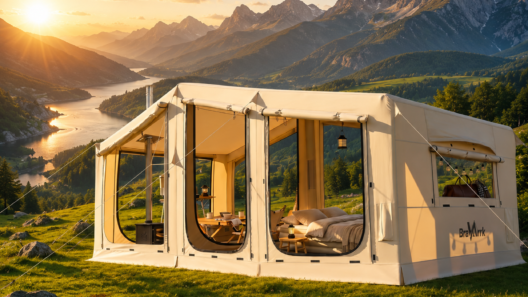



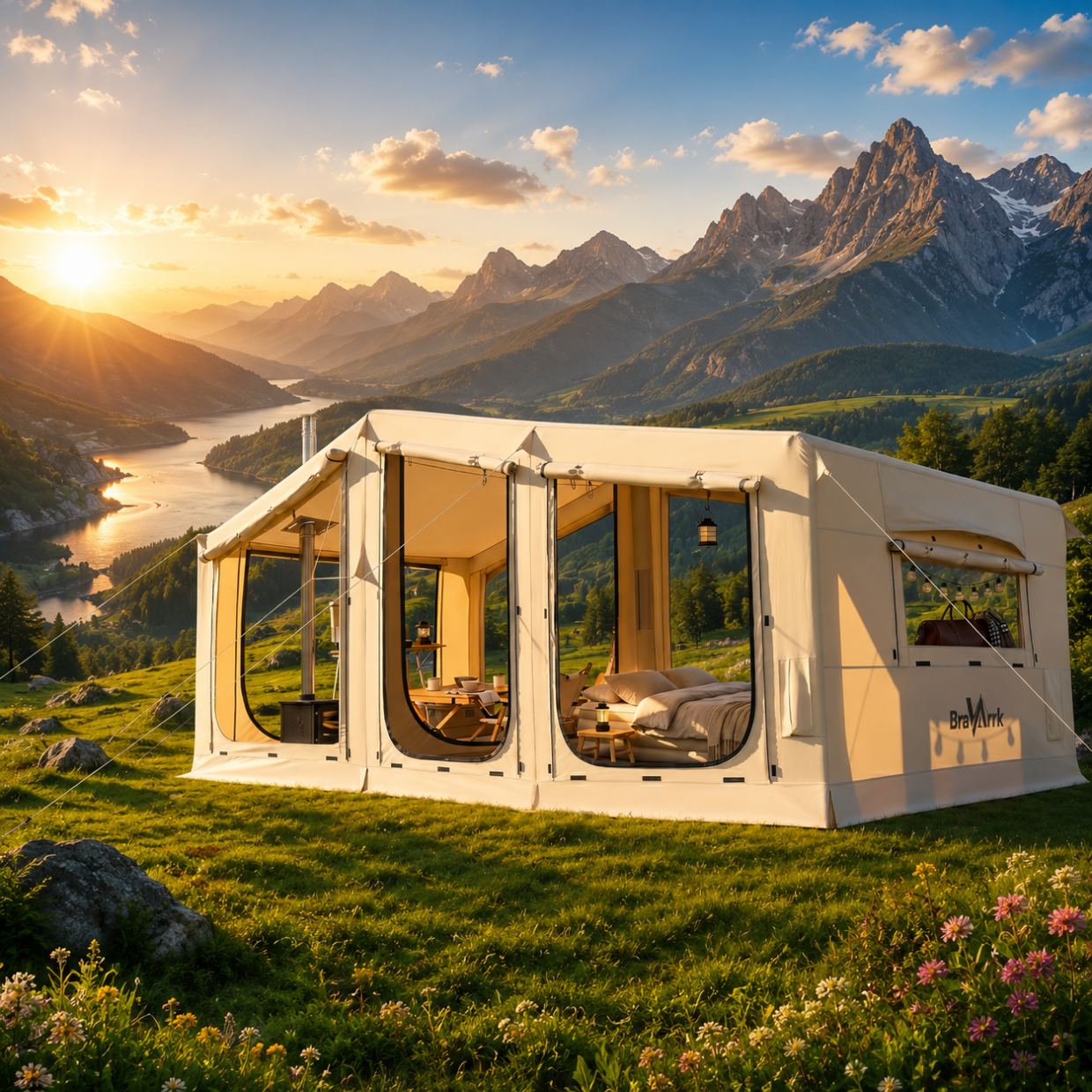
Imagine arriving at your campsite after a long drive, tired and hungry — and having your shelter fully set up in under 5 minutes, with zero poles to fiddle with and no instruction manual needed. That’s the magic of an inflatable tent for camping.
But with so many options out there, how do you know which one is right for you? Whether you’re a weekend camper, a family adventurer, or a solo backpacker, this guide will walk you through everything you need to know before making your purchase.
Table of Contents
What Is an Inflatable Tent and How Does It Work?
An inflatable tent (also called an air tent) replaces traditional metal or fibreglass poles with inflatable air beams or tubes. You simply peg the tent down, connect the pump, and inflate — the structure rises by itself.
Most modern inflatable camping tents use a single-pump system that inflates all beams simultaneously, making setup incredibly fast and straightforward. The air beams are made from durable, puncture-resistant materials (typically TPU or PVC), so they’re far more robust than they might sound.
Why Are Campers Switching to Inflatable Tents?
Before we dive into the buying guide, let’s quickly cover why inflatable tents have become so popular:
Speed of setup is the number one reason. Traditional tents can take 20–40 minutes. A quality inflatable tent for camping can be standing in 3–5 minutes.
Easier for families and solo campers — no need for a second pair of hands to hold poles while you peg.
Surprisingly durable — air beams flex in the wind rather than snapping like rigid poles. They perform exceptionally well in bad weather.
Better interior space — without poles jutting through the inner tent, you get more usable headroom and floorspace.
Just like choosing the right home appliances for your family takes research and understanding your specific needs, choosing the right tent requires the same thoughtful approach.
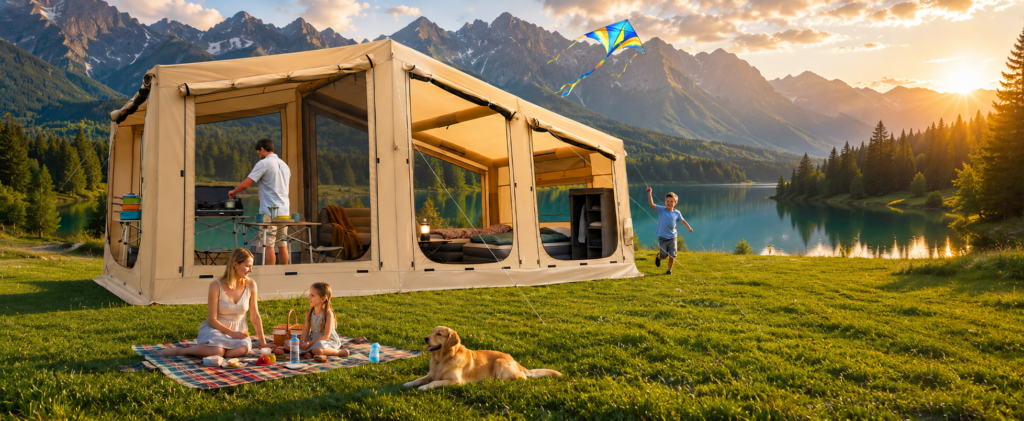
7 Key Factors to Consider Before Buying an Inflatable Tent
1. Capacity: How Many People Will Be Sleeping In It?
Tent capacity ratings are notoriously optimistic. A “4-person” tent is technically for 4 people lying side by side with zero gear inside. For comfortable camping, follow this rule:
- Solo camper → choose a 2-person tent
- Couple → go for a 3-person tent
- Family of 4 → look at 5–6 person models
A well-sized inflatable tent for camping gives you room to breathe, store gear, and move around comfortably — which makes the whole trip more enjoyable.
2. Season Rating: What Weather Will You Face?
Inflatable tents typically come in three ratings:
1–2 Season Tents are great for summer camping in mild, dry conditions. They’re lighter and more affordable, but won’t stand up to heavy rain or strong winds.
3 Season Tents handle spring, summer, and autumn conditions, including moderate rain and wind. This is the best all-rounder for most campers.
4 Season Tents are built for extreme conditions including snow and strong winds. They’re heavier and more expensive, but essential if you camp year-round or in exposed locations.
If you’re unsure which season rating suits your camping style, it’s worth pairing your research with our guide on choosing the best smart home devices — same principle applies: match the spec to your actual usage, not the worst-case scenario.
3. Material and Waterproofing: Will It Keep You Dry?
Look for these two key specs when checking waterproofing:
Hydrostatic Head (HH) Rating tells you how waterproof the fabric is. Measured in millimetres:
| HH Rating | Protection Level |
|---|---|
| 1,000–1,500mm | Light rain only |
| 2,000mm | Standard camping rain |
| 3,000mm+ | Heavy rain & driving weather |
| 5,000mm+ | Severe weather conditions |
Taped seams are equally important — even the best waterproof fabric leaks if the seams aren’t sealed. Always check that the tent you’re considering has fully taped or welded seams.
A quality inflatable camping tent should have a minimum 3,000mm HH rating for year-round use in the UK and similar climates.
4. Air Beam Pressure and Material
Not all air beams are created equal. Here’s what to look for:
TPU (Thermoplastic Polyurethane) beams are lighter, more flexible, and hold pressure better across a wide temperature range. They’re the premium choice.
PVC beams are heavier but more affordable. Perfectly fine for occasional campers.
Recommended pressure: Most quality inflatable tents operate between 6–9 PSI. Higher isn’t always better — stick to the manufacturer’s recommended pressure.
Twistlock or double-lock valves are more secure than single-lock, preventing slow deflation overnight.
5. Weight and Packability
If you’re driving to your campsite, weight is less critical. But if you’re hiking to your spot, every gram matters.
Car camping: Anything up to 15kg is generally fine. Hiking: Aim for under 5–6kg for a solo tent. Family inflatable tents aren’t typically suited to long hikes due to weight.
Also consider the packed size. A bulky inflatable tent for camping that doesn’t fit in your car boot is going to be a problem. Most manufacturers list packed dimensions — always check these before buying.
When optimising your camping kit for travel, a reliable power source is essential too. Check out our guide on the best portable power banks for long travel days to keep your devices charged on the road.
6. Pump Type: What’s Included?
The pump can make or break your setup experience. There are three main types:
Manual foot pump — the most common inclusion. Reliable but can take 5–10 minutes of effort.
Electric pump (included) — faster and less effort, though you need access to power or a car adaptor.
Multi-function pump — some premium tents include pumps that can inflate and deflate, which speeds up packing.
Also look for a pressure gauge on the pump or built into the tent valve. This prevents over-inflation, which is the most common cause of air beam damage.
7. Ventilation and Condensation Management
One often-overlooked feature in an inflatable tent for camping is ventilation. Poor airflow leads to condensation, which makes the inside of your tent damp and uncomfortable.
Look for:
- Mesh inner panels that allow airflow while keeping insects out
- Adjustable vents at the top of the tent for warm air to escape
- Double-wall construction — a flysheet and separate inner tent — which dramatically reduces condensation compared to single-skin designs
Common Mistakes First-Time Buyers Make
Buying purely on price. The cheapest inflatable tents often have poor waterproofing ratings, low-quality valves, and flimsy beams. Invest a little more upfront and you’ll save money long-term.
Ignoring the packed size. A tent that doesn’t fit in your vehicle or storage space is useless, no matter how good it is.
Skipping the test pitch. Always set up your new inflatable camping tent in the garden before your first trip. Learn the pump, the pegging layout, and the valve positions — so there are no surprises at the campsite.
Not checking the repair kit. A small puncture is easy to fix with the right kit. Make sure your tent comes with one, or buy a TPU/PVC repair patch separately.
What’s the Best Inflatable Tent for Camping in 2026?
After reviewing all the key factors above, if you’re looking for a reliable, well-reviewed option that ticks all the boxes — good waterproofing, quality air beams, fair price point, and fast setup — then this inflatable tent for camping on Amazon is worth a serious look.
It’s consistently well-rated by real campers for its ease of setup, weatherproofing performance, and spacious interior — making it one of the most practical choices available right now.
👉 Check the latest price and reviews here →
Quick Comparison: Inflatable Tent vs. Traditional Tent
| Feature | Inflatable Tent | Traditional Pole Tent |
|---|---|---|
| Setup Time | 3–5 minutes | 15–40 minutes |
| Wind Resistance | Excellent (beams flex) | Good (poles can snap) |
| Weight | Slightly heavier | Lighter (poles are thin) |
| Interior Space | More usable space | Poles reduce usable space |
| Durability | Very high (with care) | High |
| Price | Higher | Lower entry-level cost |
| Best For | Families, ease of use | Backpackers, budget campers |
Caring for Your Inflatable Tent: Make It Last for Years
Getting the most from your inflatable tent for camping comes down to proper care:
Never pack it away wet. If you have to due to weather, unpack and dry it fully at home before storing. Mould and mildew are a tent’s worst enemies.
Store loosely, not compressed. Unlike traditional tents, storing inflatable tents loosely in a cool, dry place preserves the integrity of the air beams.
Clean with warm water and mild soap. Avoid harsh chemicals, which degrade waterproofing treatments.
Reproofing. After a few seasons, re-apply a DWR (Durable Water Repellent) spray to the flysheet to restore water beading performance.
Frequently Asked Questions
Can an inflatable tent puncture easily?
Modern air beams are made from thick, multi-layer TPU or PVC — they’re much tougher than they look. Punctures are rare with normal use, and easy to repair with a patch kit when they do occur.
How long does it take to inflate?
Most inflatable tents take 3–7 minutes with a manual pump. Electric pumps can cut this to under 2 minutes.
Are inflatable tents good in high winds?
Yes — in many cases, better than traditional tents. Air beams flex and absorb impact rather than breaking. Premium models are tested in winds exceeding 60mph.
What if a beam deflates overnight?
This usually means the valve needs checking. Most quality inflatable camping tents hold pressure very well once correctly inflated. Always check valves are fully closed after inflation.
Final Thoughts
Choosing the right inflatable tent for camping doesn’t have to be complicated. Focus on capacity, season rating, waterproofing, air beam quality, and ventilation — and you’ll find a tent that keeps you comfortable for years of adventures.
Whether you’re planning a weekend getaway with the family or your first solo camping experience, the investment in a quality inflatable tent pays off every single time you arrive at a campsite and have shelter up in minutes while your neighbours are still wrestling with poles.
👉 See our top recommended inflatable tent on Amazon →
You Might Also Enjoy Reading:
- 🏠 How to Choose the Best Home Appliances for Families
- 🔌 Best Smart Home Devices This Year
- 🔋 Best Portable Power Banks for Long Travel Days
- ☕ Smart Coffee Grinders for Professional Grade Morning Brews
- 🧹 How Robot Vacuums Simplify Everyday Home Cleaning
Disclosure: This post contains affiliate links. If you purchase through our links, we may earn a small commission at no extra cost to you. We only recommend products we genuinely believe in.